
Inside a Live Quran Lesson
What Happens in a Live Online Quran Class?
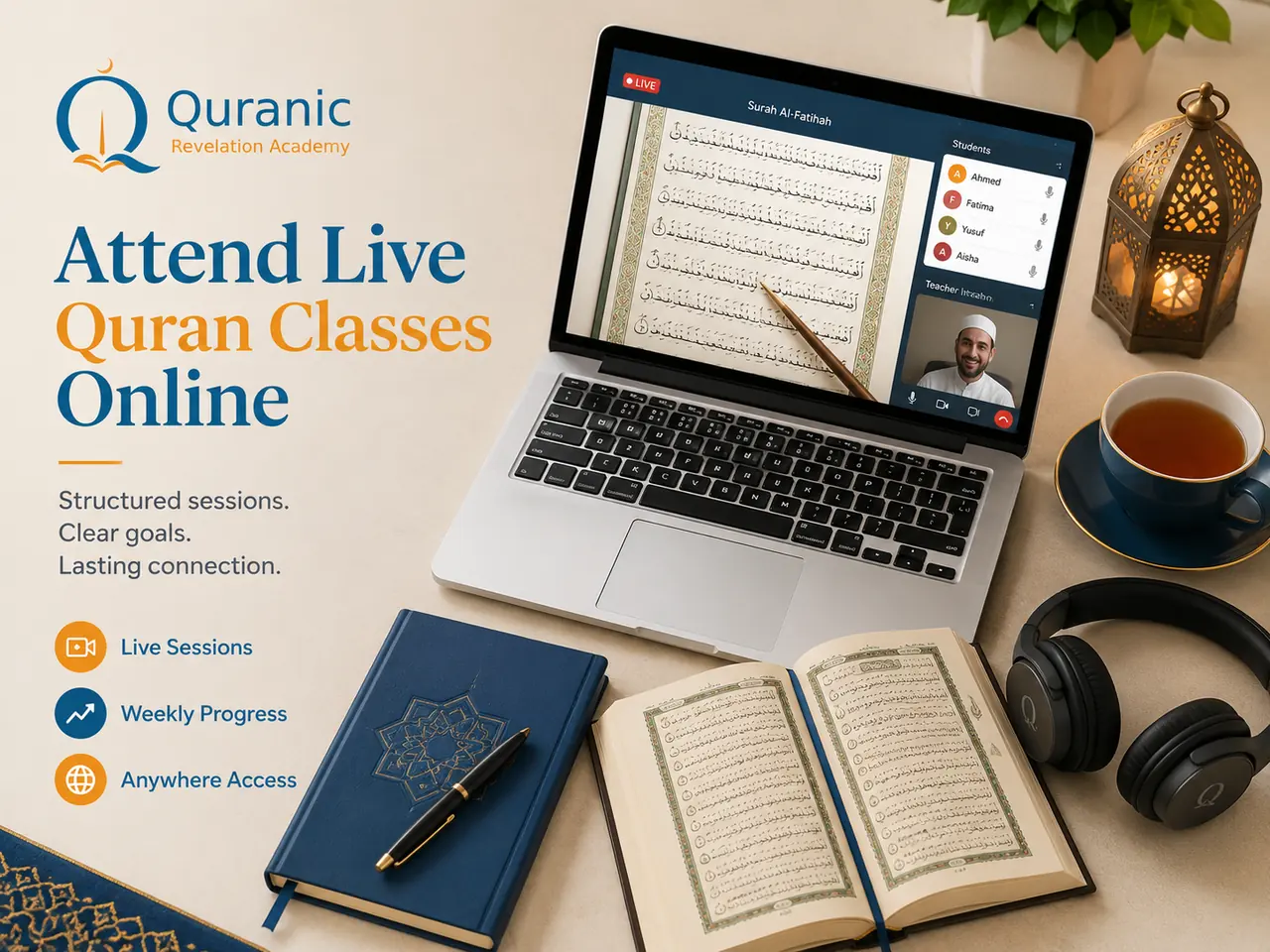
A useful live Quran lesson is not a video call where a teacher simply watches you read. It is a structured feedback session: assessment, recitation, correction, explanation, repetition and a clear assignment for the next lesson.
A good class usually begins with a short review, includes substantial student reading, focuses on specific pronunciation or Tajweed corrections, adapts the pace to the learner and ends with a small practice target.
The first lesson usually begins with listening, not lecturing
Before deciding what you need, the teacher has to hear you.
A short reading sample can reveal whether the main priority is letter recognition, fluency, articulation, Tajweed, memorization accuracy or something else.
The purpose of assessment is not to judge the learner. It prevents the course from spending weeks on material that does not match the real level.

Most of the class should contain active student work
Quran reading improves by reading. A lesson where the teacher speaks for forty minutes and the student reads for three minutes may contain useful information, but it offers little time for personalized correction.
The student should regularly produce the skill being learned.
That may mean reading lines from a Qaida, reciting Quran, repeating a difficult sound, applying a Tajweed rule or reviewing memorized verses.
Al-Azhar — remote Quran recitation and correction sessions • Dar al-Ifta — learning Quran reading from a proficient teacher • Tajweed — general reference

Correction is the core advantage of live learning
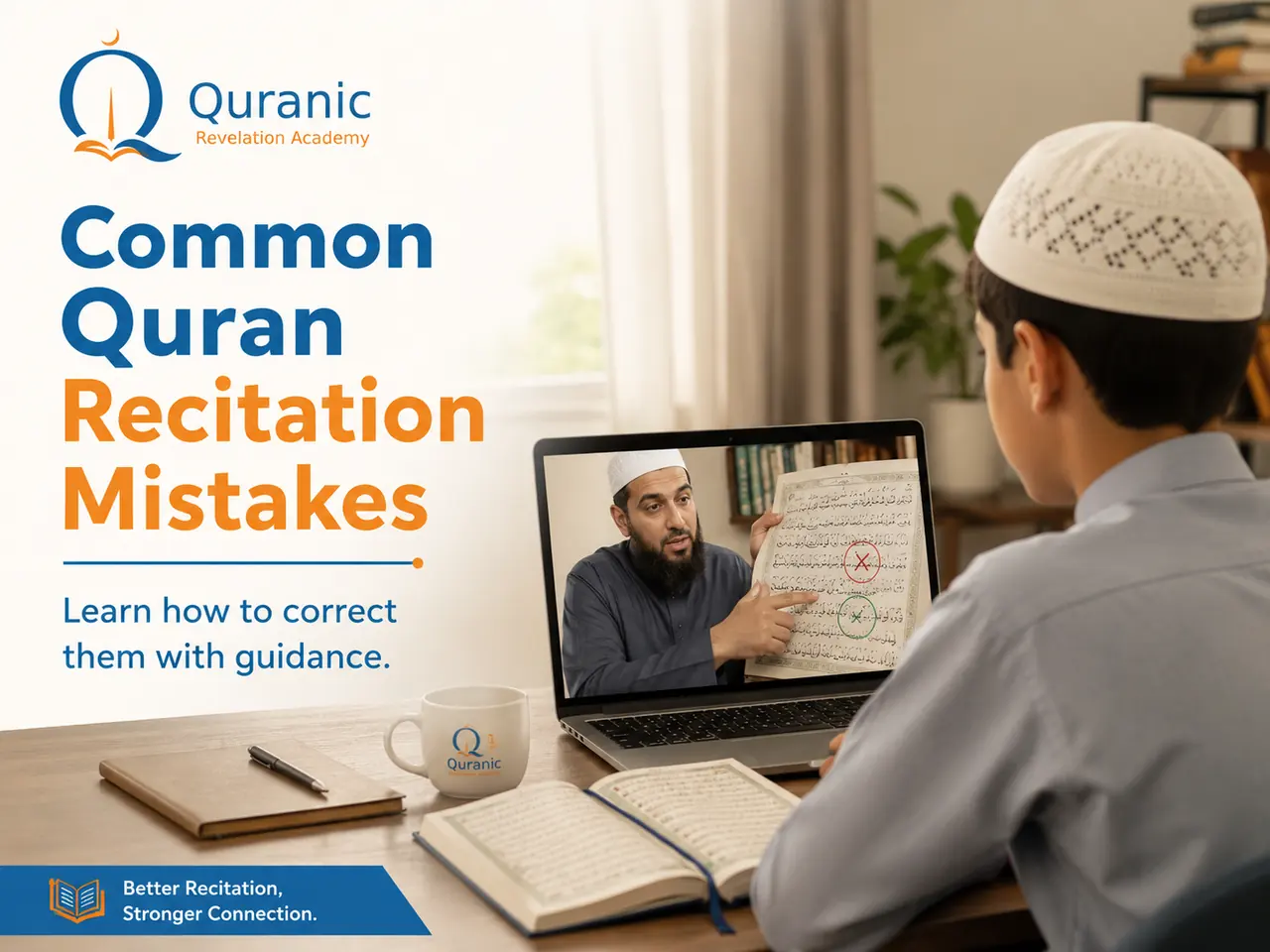
A recorded lesson explains what correct pronunciation should sound like. A live teacher can compare that model with the exact sound you produced.
Al-Azhar has run remote Quran recitation sessions through Microsoft Teams that combine recitation correction, performance control and practical Tajweed under specialist supervision.
That is essentially the educational value of live online Quran teaching: distance changes the medium, but the cycle of listening and correction remains.

A correction should be specific enough to repeat
“Wrong, try again” may occasionally be enough when the student already knows the issue. It is not a complete teaching method.
Useful feedback identifies the sound, demonstrates it and lets the learner attempt the corrected version.
Sometimes the teacher isolates one letter. Sometimes the issue is a vowel, a madd length, ghunnah or stopping position. Good feedback narrows the problem until the student can act on it.
The teacher should adjust the lesson while it is happening
A curriculum gives direction, but the actual student determines the pace.
If a rule is already stable, there is little value in repeating it for weeks simply because the textbook has more exercises. If a foundational letter is still unstable, moving ahead too quickly creates additional errors.
A live class allows the teacher to make these decisions in real time rather than forcing every learner through an identical recording.

Technology matters mainly when it interferes
You do not need an elaborate studio. You need audio clear enough for pronunciation, a stable connection, the correct reading material and a quiet enough environment to hear subtle differences.
Headphones may help some learners. Others sound clearer through a good device microphone.
The goal is for the technology to disappear into the background so teacher and student can concentrate on recitation.
A good lesson ends with a small next step
Before the call ends, the student should know what to practise.
That may be three lines, one Tajweed rule, two difficult letters or a memorized passage that needs strengthening.
Without this bridge between lessons, the next session begins almost from zero. With it, each class becomes part of a continuous learning loop.
A typical 30-minute lesson might look like this
- Three to five minutes reviewing the previous assignment.
- Ten to fifteen minutes of student reading and direct correction.
- Five minutes focused on one recurring pronunciation or Tajweed point.
- A short re-reading of the corrected passage.
- One clear assignment for practice before the next class.
- A brief progress note when necessary.
Signs a live class is not using live learning well
- The teacher does almost all the talking.
- The student is placed at a level before anyone hears the reading.
- Corrections are vague and never revisited.
- Every lesson follows the same script regardless of progress.
- Technical problems consume a large part of every session.
- The student finishes without knowing what to practise.
Frequently asked questions
Do online Quran classes work for pronunciation?
Yes when audio quality is adequate and the teacher actively listens and corrects. Remote Quran correction is also used in institutional teaching settings.
What equipment do I need?
Usually a stable internet connection, a phone, tablet or computer with usable audio, and the Quran or learning material required by the teacher.
Should the teacher or student talk more?
It depends on the lesson, but a reading class should include substantial student reading so the teacher has enough material to assess and correct.
Can beginners take live classes?
Yes. A live beginner class may begin with Arabic letters, vowels and basic reading rather than full Quran pages.
How do I know the class is helping?
Recurring mistakes should gradually decrease, assignments should become clearer and the student should be able to describe what is currently being improved.
Sources and further reading
Experience the correction process yourself
A live trial lesson lets the teacher hear your current reading and shows you exactly how online correction works.


Comments
One response to “What Happens in a Live Online Quran Class?”
[…] article on what happens during a live online Quran class shows how assessment, correction and practice can fit together in a normal […]