Online Quran Classes for Kids
Engaging one-to-one Quran learning designed especially for children.
Personal Quran and Islamic learning built around your child
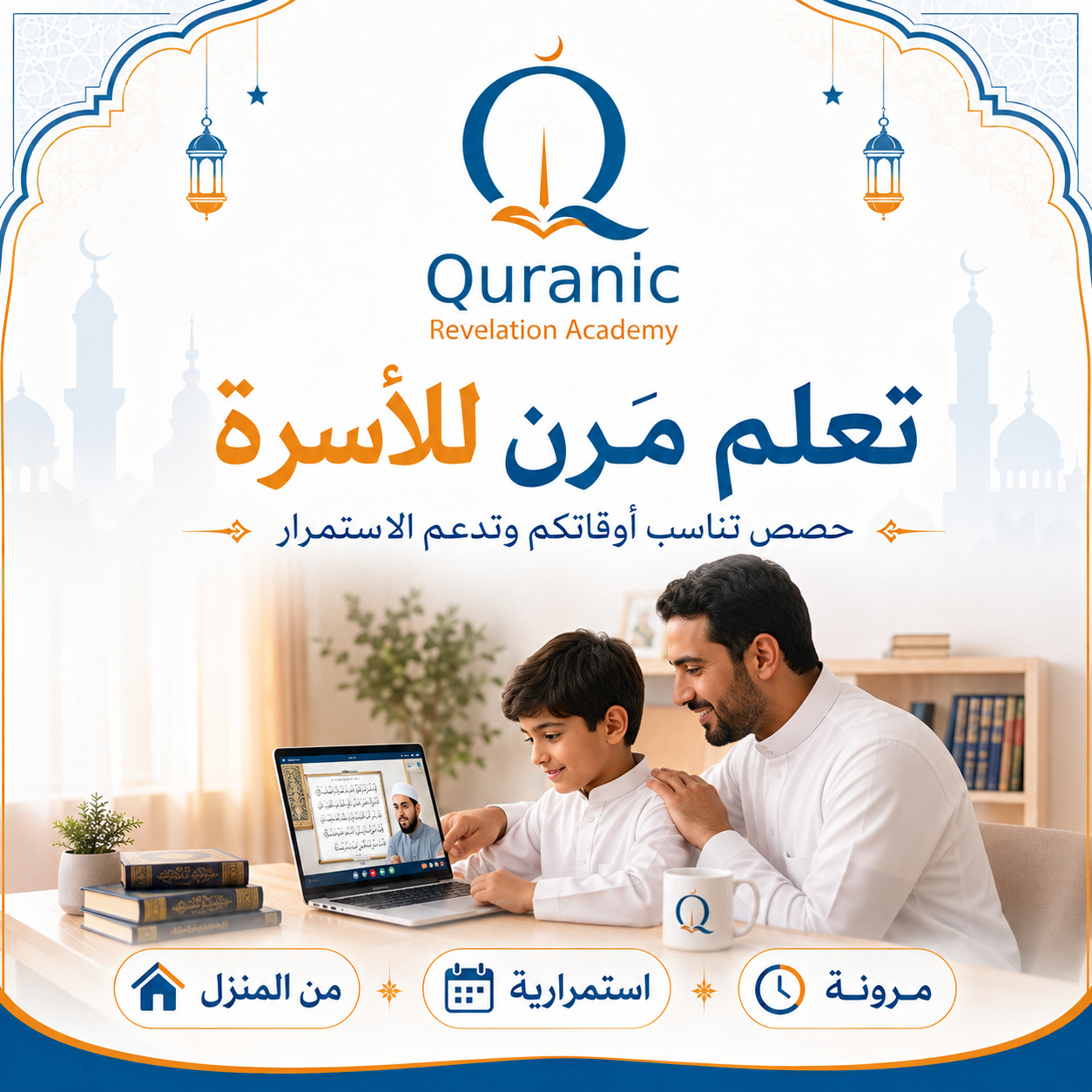
Live 1-to-1 lessons give children direct teacher attention without placing every learner into the same starting point. Parents can choose Quran Reading, Tajweed, Quran Memorization, Arabic or Islamic Studies according to the child’s current level and learning goal.
What can your child learn?
The right program depends on what your child can already do and what you want to build next. Each option below connects directly to the relevant learning path and can also open the free-trial form with both Child and the selected program already filled in.
Quran Reading
For children beginning with Arabic letters, joining sounds and Quranic words, or for readers who need stronger accuracy and confidence.
Tajweed
For children whose reading is ready for closer work on Makharij, pronunciation, Tajweed rules and applying correction during actual recitation.
Quran Memorization
For families who want memorization to become the main learning goal. The free trial helps the academy begin from the child’s current memorization level.
Arabic Language
For children developing Arabic letters, reading, useful vocabulary, sentence understanding and broader language comprehension.
Islamic Studies
For children building an age-appropriate understanding of faith, worship, character, Seerah and how Islamic values connect with everyday Muslim life.
A lesson can respond to the child in front of the teacher
Children do not all learn at the same speed. In an individual lesson, the teacher can see whether the learner needs more explanation, more repetition, a simpler next step or a greater challenge.
The lesson can start from what the child already knows instead of repeating material unnecessarily.
Learning can be broken into manageable steps so the child knows what to focus on next.
The teacher can respond to reading, pronunciation or understanding during the lesson rather than after it.
Repeated successful practice can help the learner become more comfortable taking the next step independently.
A clearer first step for parents
You do not need to decide every detail before contacting the academy. The free-trial form collects the information needed to understand the child’s learning goal and preferred schedule.
Select Quran Reading, Tajweed, Memorization, Arabic, Islamic Studies or choose Not Sure.
Add the learner’s age, current level, teaching-language preference and useful learning notes.
Share time zone, preferred days and the part of the day that works better for your family.
The trial gives the academy a practical starting point before regular learning decisions are made.
What parents can look for over time
Progress will look different depending on the program, but useful signs are often more specific than simply counting completed pages or lessons.
Skills that once required frequent correction begin to become more stable.
Previously learned material is easier for the child to recognise and use again.
The learner gradually needs less prompting for familiar tasks.
The child becomes more willing to read, answer or attempt new material.
Review the academy before you decide
Parents can explore teacher information, safeguarding, family guidance and pricing before requesting a regular learning plan.
How to choose the right Quran starting point for your child
The best Quran program for a child depends more on current ability than age alone. One child may still be learning Arabic letters, another may already read short Quranic words, while another may read fluently and need stronger Tajweed or a structured memorization plan.
Before choosing a long-term learning path, it helps to identify what the child can already do independently and where regular teacher support is still needed.
- If letter recognition and joined-letter reading are difficult, Quran Reading may be the best starting focus.
- If the child already reads but needs better pronunciation and rule application, Tajweed classes may become more important.
- If reading is reasonably stable and the child wants to retain surahs, Quran memorization can be added with regular revision.
- If the goal includes vocabulary and comprehension, Arabic classes can support broader language development.
- For beliefs, worship, Seerah and Islamic manners, families can also explore Islamic Studies.
Quran Reading, Tajweed and Memorization for children
These three areas support one another, but they are not the same skill.
Quran Reading
Children learn to recognize Arabic letters, follow joined letters, read Quranic words and gradually become more accurate and confident with Quranic text.
Tajweed
Tajweed gives greater attention to correct pronunciation, Makharij and the practical rules of Quran recitation. A child can begin receiving pronunciation guidance early while studying more detailed Tajweed as reading becomes stronger.
Quran Memorization
Memorization focuses on retaining verses and surahs through repetition and revision. Accurate reading and teacher correction remain important so that memorized passages are not built around repeated pronunciation mistakes.
What age-appropriate 1-to-1 Quran learning can look like
Children do not all learn at the same pace. A younger learner may need shorter learning steps, more repetition and frequent encouragement, while an older child may be able to work for longer on reading accuracy, Tajweed rules or memorization targets.
In a live 1-to-1 lesson, the teacher can focus on the child in front of them instead of asking every student in a group to move at the same speed. The useful question is not simply how quickly a child finishes a level, but whether the skill being taught is becoming more accurate and independent.
What parents can track as Quran learning develops
Parents do not need to be Quran teachers themselves to notice meaningful progress. Useful signs can include:
- Recognizing letters and Quranic words with less prompting.
- Repeating fewer of the same reading mistakes.
- Reading short passages with greater continuity.
- Remembering previously corrected pronunciation.
- Reciting memorized portions with greater consistency.
- Understanding which skill the child is currently working on.
- Showing greater confidence when opening and reading from the Quran.
Progress is not always perfectly linear. A child may improve quickly in one area and need more repetition in another, so steady development is usually more useful to watch than speed alone.
Choosing a Quran teacher for your child
For parents, the teacher-child relationship matters as much as the subject itself. A suitable teacher should be able to listen carefully, correct clearly, communicate at the learner’s level and maintain a lesson pace that allows the child to understand rather than simply rush through material.
Families can review information about Quranic Revelation Academy teachers before deciding on a learning path.
Parents should also understand how an academy approaches child safety, communication and family responsibilities. You can review our Safeguarding & Child Protection policy and Parent Guidelines before enrollment.
When is a child ready for the next Quran learning stage?
Moving to the next stage should depend on ability rather than simply completing a fixed amount of time. A child may be ready to place more attention on Tajweed when basic Quran reading becomes reasonably stable. Memorization can grow when the learner is able to repeat and retain passages without losing previously corrected reading.
Some children may study more than one subject at the same time. The important point is that the workload remains manageable and that each subject has a clear learning purpose.
Online Quran classes as children grow
A learning plan that works for a young child may need to change as the learner grows. Older children may become ready for longer passages, more independent revision, deeper Tajweed work, broader Arabic learning and more detailed Islamic Studies.
Families with older learners can also explore our online Quran classes for teenagers.
Common questions parents ask about online Quran classes for kids
Can a complete beginner child learn Quran online?
Yes. A child can begin with Arabic letters, sounds, joining letters and simple Quranic words before moving toward longer passages and greater reading fluency.
Should my child learn Quran Reading or Tajweed first?
If the child is still struggling to identify letters or read connected Quranic words, reading foundations are usually the more immediate priority. Correct pronunciation can still be introduced from the beginning, with deeper Tajweed study developing later.
Can children study Quran memorization and reading together?
Yes. Memorization and reading can develop together as long as previously memorized passages are reviewed and pronunciation is corrected rather than ignored.
Do children need to know Arabic before Quran classes?
No. A child can learn Quran reading without already speaking Arabic. Arabic language study can be added separately when vocabulary and comprehension are also learning goals.
How do I know whether online Quran learning suits my child?
A live trial lesson can help a parent observe how the child responds to the teacher, lesson format and 1-to-1 online environment before choosing a longer-term plan.
Can I review prices before booking?
Yes. Families can review the available Quran class pricing and plans before enrollment.
Start with your child’s current level
Explore all Quranic Revelation Academy programs or begin with a live 1-to-1 trial lesson before choosing the most appropriate learning path.