Online Arabic Classes
Build Arabic reading, vocabulary, comprehension and communication skills.
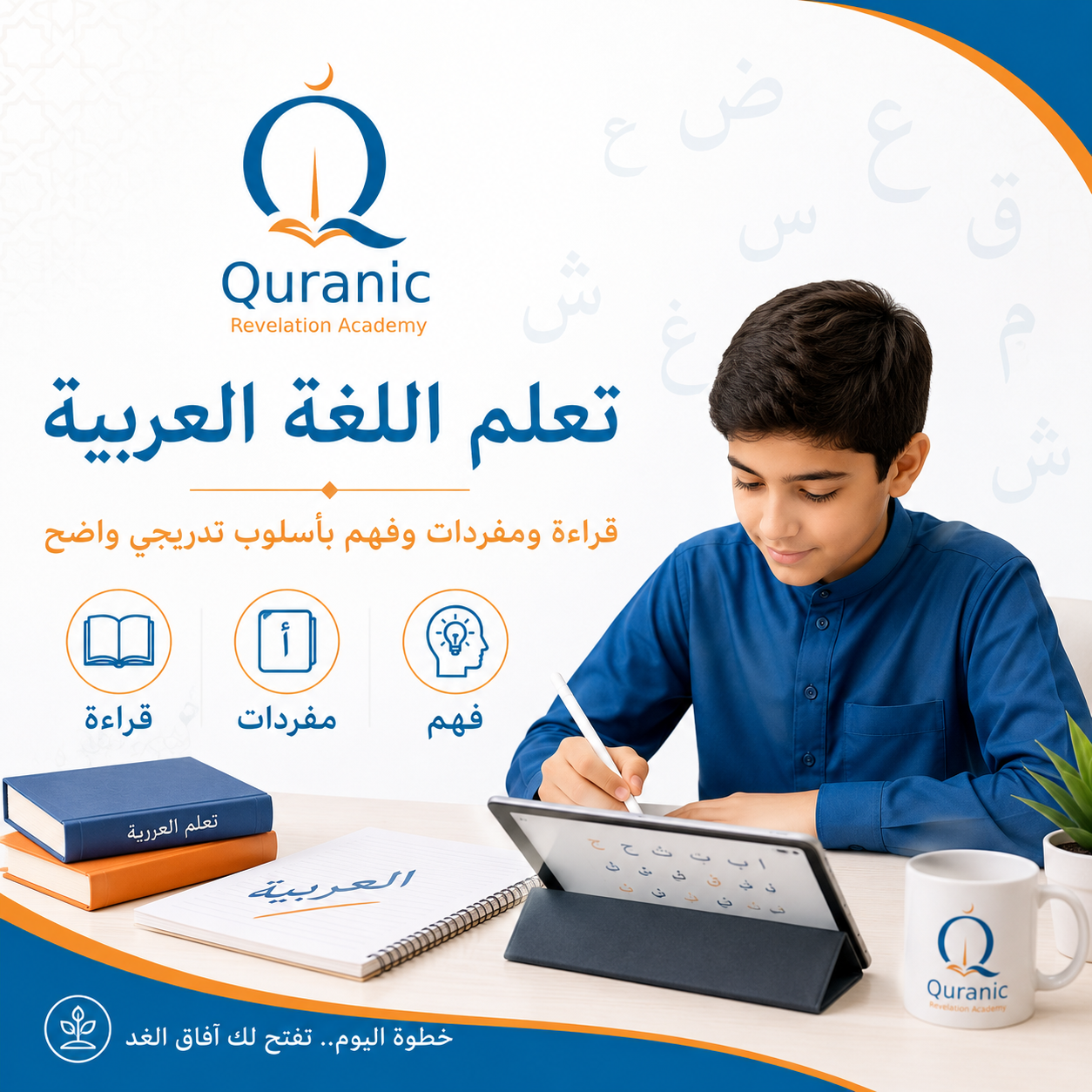
Build Arabic from reading toward real understanding
This live 1-to-1 Arabic program helps learners develop the language step by step. Depending on the learner’s current level, lessons can begin with letters and sounds or move directly into reading, vocabulary, sentence comprehension and practical expression.
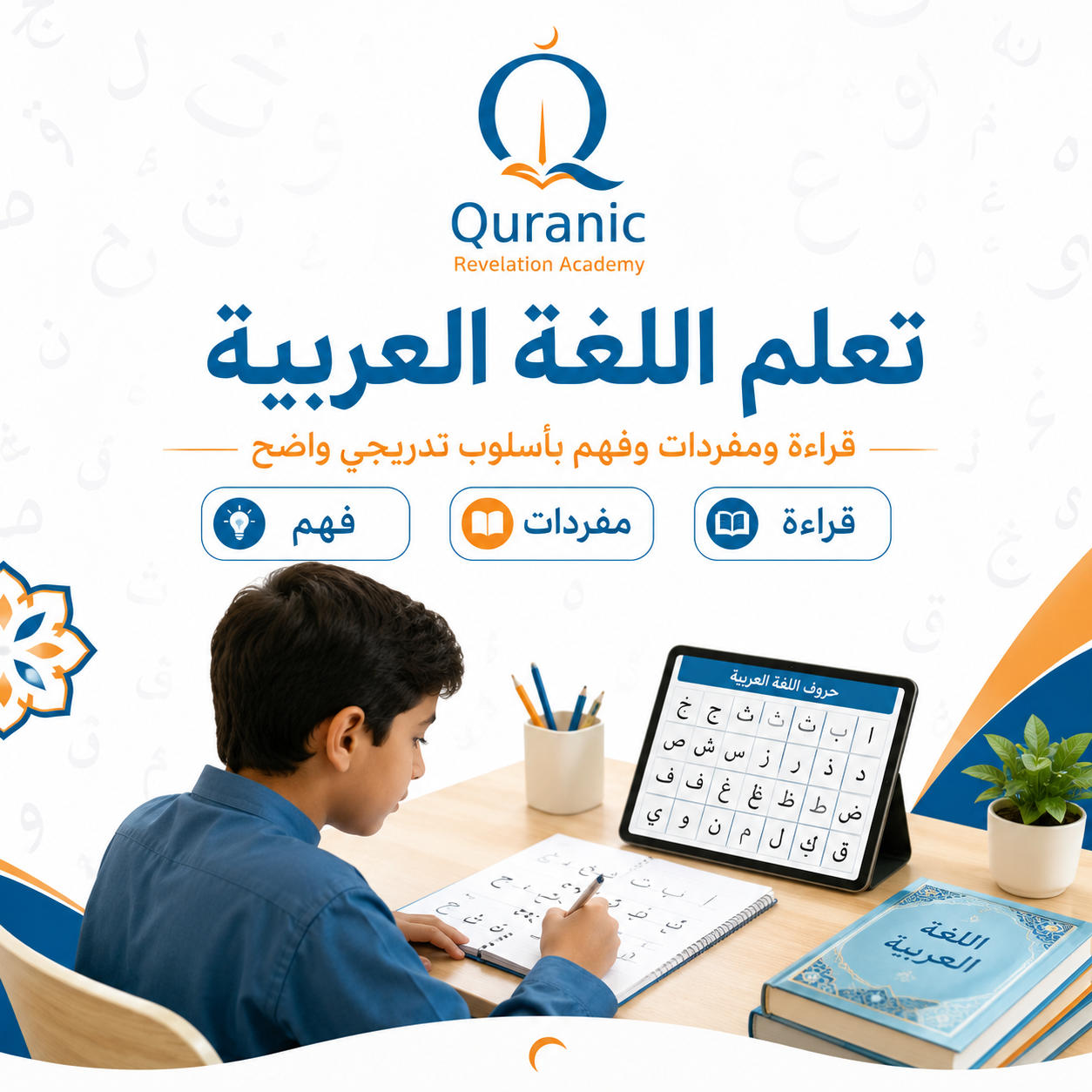
Arabic lessons can begin from different levels
Some learners are completely new to Arabic. Others can read but understand very little. The learning path should begin with the skill that needs the most attention rather than forcing every student through the same start.
Complete Beginners
Learners who need to begin with Arabic letters, sounds, basic reading patterns and simple vocabulary.
Readers Building Understanding
Learners who can already read Arabic words but want stronger vocabulary, sentence understanding and comprehension.
Developing Language Learners
Students ready to move beyond basic recognition toward understanding and using Arabic more independently.
What the learner can work on
Arabic is more than recognising written letters. The program connects reading with useful vocabulary, sentence meaning, comprehension and gradual expression so the learner develops a wider understanding of the language.
Five stages from letters to understanding and expression
The stages provide a clear learning direction, but they are not a fixed timetable. Learners can begin at the point that best matches their current Arabic level.
Letters & Sounds
Recognise Arabic letters, distinguish their sounds and become familiar with how letter forms change inside words.
Words & Sentences
Move from individual letter recognition toward reading words and increasingly complete Arabic sentences.
Vocabulary Building
Develop useful vocabulary and connect new words to familiar examples and contexts instead of memorising isolated lists.
Reading & Comprehension
Read short passages with greater focus on meaning, sentence relationships and understanding information from context.
Expression & Practical Arabic
Strengthen the ability to understand and use familiar language more independently through guided practical activities.
How Arabic lessons work
A personal lesson allows the teacher to see exactly where the learner is strong and where understanding breaks down. Reading, vocabulary and comprehension can then be practised together rather than as disconnected skills.
The teacher begins by finding out what the learner can already read and understand.
New vocabulary and structures are connected to meaningful examples instead of being presented as isolated items.
The teacher can ask questions, adjust explanations and see whether the learner actually understands what was studied.
Important language is used again through reading, comprehension and practical activities to strengthen retention.
What progress in Arabic can look like
Improvement is not limited to reading faster. A stronger learner gradually recognises more language, understands more of what is read and depends less on translation or repeated explanation.
Words and sentences become easier to recognise and read with less hesitation.
Familiar words increase and begin to connect across different texts and situations.
The learner understands more complete sentences and short passages instead of individual words only.
The learner gradually relies less on constant translation and more on direct understanding.
More learning options
What learners build in online Arabic classes
Learning Arabic involves several connected skills. A learner may need to recognize written words, build vocabulary, understand sentence meaning and gradually become more confident using Arabic in context. The right starting point depends on what the student can already read and understand.
Some students begin with the Arabic alphabet and basic word reading. Others can already read Arabic script but need stronger vocabulary and comprehension. More experienced learners may focus on understanding longer sentences, building expression and improving their ability to follow Arabic texts.
Arabic reading and Quran reading are related but different
Learning to read Arabic can support Quran study, but general Arabic learning and Quran reading classes do not have exactly the same goal.
Quran Reading
Quran reading focuses on recognizing and reading Quranic text accurately, developing fluency and building confidence in recitation.
Arabic Language
Arabic language learning goes beyond decoding written words. It can include vocabulary, comprehension, sentence structure and the ability to understand how words function together in context.
A student may therefore be able to read Quranic Arabic aloud without understanding every word, while another learner may understand some Arabic vocabulary but still need help reading accurately.
Core Arabic skills students may develop
Arabic letters and word recognition
Beginners may start by recognizing Arabic letters in their different written forms and learning how letters connect inside words.
Vocabulary development
Building vocabulary gives learners a larger bank of words they can recognize and understand. New vocabulary becomes more useful when it is repeatedly encountered in meaningful contexts.
Reading comprehension
Reading comprehension develops when a learner moves beyond pronouncing words and begins understanding the meaning of phrases and sentences.
Sentence structure
Students can gradually learn how Arabic words relate to one another inside a sentence. This helps them understand patterns rather than treating every sentence as an isolated group of words.
Listening and understanding
Exposure to spoken Arabic can help learners connect written vocabulary with pronunciation and meaning.
Expression and communication
Depending on the learner’s level and goals, Arabic study can also include forming simple expressions and becoming more comfortable using familiar words and sentence patterns.
How we identify an Arabic learner’s starting level
Age alone does not determine the correct Arabic level. Two learners of the same age may have completely different backgrounds. One may be seeing Arabic letters for the first time, while another may already read Arabic but understand very little of what they read.
A useful starting point can consider letter recognition, word reading, vocabulary, comprehension and the learner’s ability to understand or form simple Arabic expressions.
This allows lessons to focus on missing skills instead of making a student repeat material they already know or pushing them into content that is too advanced.
How Arabic progress can develop over time
Foundation
The learner develops stronger recognition of Arabic letters, sounds and common written patterns.
Word level
The student becomes more confident reading and understanding individual words and useful vocabulary.
Sentence level
Words begin to connect into phrases and sentences, allowing the learner to work on meaning and structure.
Comprehension
The learner gradually understands more of what is read or heard instead of concentrating only on pronunciation.
Independent use
With continued practice, students can become less dependent on word-by-word support and more confident engaging with Arabic texts and expressions.
Arabic learning for Quran and Islamic studies
Arabic can support a student’s broader Islamic learning because many Quranic and Islamic terms are encountered in Arabic. However, Arabic study should not be presented as a shortcut to understanding every Quranic verse or Islamic text.
Language ability develops gradually. Students interested in broader religious learning can also explore our online Islamic Studies classes alongside Arabic and Quran study.
Online Arabic classes for kids, teenagers and adults
Arabic learning goals can vary significantly by age, experience and motivation. Children may benefit from shorter steps and frequent repetition, while teenagers and adults may be ready for more direct work with vocabulary, comprehension and sentence patterns.
- Online classes for kids can combine Arabic with Quran learning according to the child’s level.
- Online classes for teenagers can support Arabic development alongside Quran and Islamic Studies.
- Online classes for adults can serve complete beginners, returning learners and students who already have some Arabic background.
Common questions about learning Arabic online
Can I learn Arabic online as a complete beginner?
Yes. A beginner can start with Arabic letters, sounds and basic words before gradually moving toward vocabulary, sentences and comprehension.
Do I need Arabic before learning to read the Quran?
No. A learner can begin Quran reading without being able to speak or understand Arabic fluently. Quran reading and Arabic language learning develop different but related skills.
Is Quranic Arabic the same as modern spoken Arabic?
They are related through the Arabic language, but the vocabulary, structures and learning goals may differ. A learner’s program should reflect whether the main goal is Quran study, broader language ability or both.
Can Arabic help me understand the Quran better?
Developing Arabic vocabulary and comprehension can support a learner’s ability to recognize more Arabic words and structures, but understanding Quranic meaning also requires appropriate study and explanation.
Can children and adults follow the same Arabic program?
The core language skills may overlap, but lesson pace, examples and presentation should match the learner’s age, ability and goals.
Choose the Arabic learning path that matches your level
Explore all Quranic Revelation Academy programs, or begin with a live 1-to-1 lesson to see which Arabic skills should receive the most attention first.